
News & Commentary
Aug 04, 2026
Kansas voters reject constitutional amendment on judicial selection by wide margin
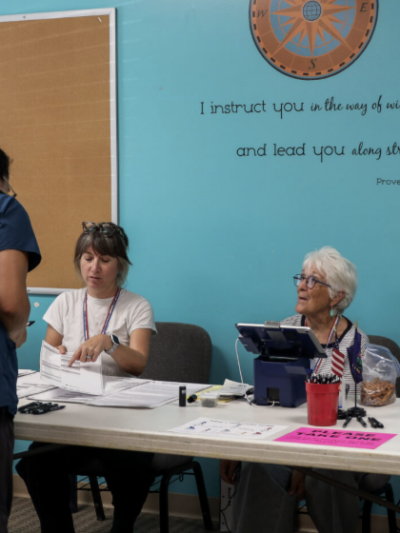
The American Civil Liberties Union of Kansas, Planned Parenthood Great Plains Votes and Kansas Appleseed joined forces to form Kansas United for Impartial Courts in a campaign to oppose the constitutional amendment. They warned that the amendment would allow out-of-state billionaires to buy the court.
“The billionaire political donors and politicians behind this amendment tried to buy our Supreme Court,” said Micah Kubic, executive director of the ACLU of Kansas. “They tried to turn our justices into politicians for sale, all so they could control the court’s rulings and take away our rights. But tonight, Kansas said no.”
Aug 04, 2026
Groups make final pleas on Kansas Supreme Court ballot question
Kubic, who is also executive director of the American Civil Liberties Union of Kansas, said an election would turn justices into politicians seeking dollars for campaigns. He expressed concern over the influence that campaign money could have in the court system.
“Wisconsin is the best example because it is the most recent one of what this new landscape looks like,” he said.

Aug 01, 2026
The sleeper referendum that could reshape the national judiciary
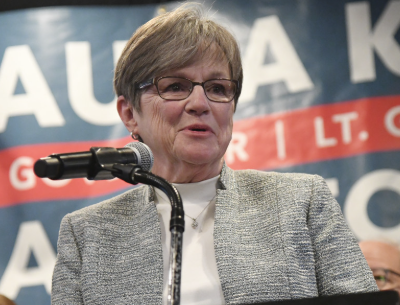
Micah Kubic, the executive director of the ACLU of Kansas, said he expected the court to soon consider several controversial policies, including on LGBTQ+, labor and voting rights.
Jul 31, 2026
Kansas Supreme Court amendment: Voters will decide whether to directly elect justices
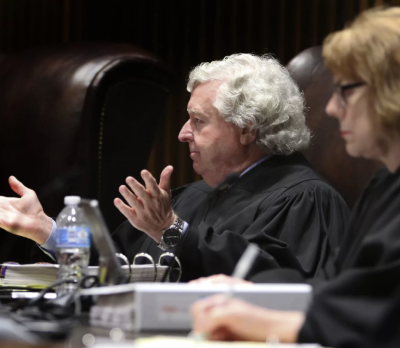
Micah Kubic, executive director of ACLU of Kansas, worries that influence from billionaire donors would become rampant under a system where judges must campaign for votes from the public.
“I would far prefer a Kansas Supreme Court that is fair and impartial, where the things that I believe in lose, as they often have, to one that is bought and paid for by billionaire political donors,” Kubic said.
Jul 24, 2026
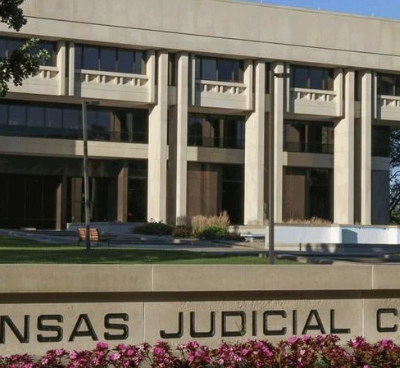
Kansas would join 21 other states in electing state Supreme Court justices if amendment passes Aug. 4; if rejected, Kansas would remain the only state with a bar-controlled nominating commission
Micah Kubic, executive director of ACLU of Kansas, said, “This is a blatant attack by the legislators on our justices, and it’s part of a decades-long pattern of politicians attempting to punish the judicial branch for issuing decisions on education and reproductive freedom that they disagree with. … Partisan elections quickly become fights between out-of-state, big money interests. These elections become less about the voters and constituents of the state and more an opportunity for out-of-state big money interests to wage war against one another. And now, lawmakers would like our state’s highest court to be smack in the middle of that war.”
Jul 23, 2026
‘Their vote is important’: Early voting underway in Johnson County amid concerns over reduced locations
The ACLU of Kansas found the eight closed locations accounted for 19% of all early votes cast in the 2024 general election.

Jul 22, 2026
Vote no or vote yes: what your vote really means in the August primary election
Micah Kubic, the President for the Kansas United for Impartial Courts, and Elizabeth Patton, the regional director for the Americans for Prosperity Kansas, shared what you’re really voting for when you see or hear something that’s telling you to vote no or vote yes.
Jul 13, 2026
Learn the major arguments for and against electing Kansas Supreme Court justices
“I think it’s pretty clear that the reason for the change is to move us away from a system of fair and impartial justice and instead towards one where justices are politicized,” said Micah Kubic, executive director of the ACLU of Kansas.

Jul 09, 2026
ACLU, League of Women Voters allege Kansas statute clashes with federal voting rights law
The American Civil Liberties Union of Kansas and League of Women Voters of Kansas put the secretary of state on notice of a potential lawsuit alleging a new election-related state statute conflicts with federal election law.
A notice letter sent by the ACLU, on behalf of the LWV, to Secretary of State Scott Schwab asserted provisions of House Bill 2437 were potentially not compliant with the National Voter Registration Act of 1993. The bill was designed to rapidly remove ineligible voters from registration rolls and restrict the use of voter registration websites.
Stay Informed
Sign up to be the first to hear about how to take action.
By completing this form, I agree to receive occasional emails per the terms of the ACLU’s privacy statement.
By completing this form, I agree to receive occasional emails per the terms of the ACLU’s privacy statement.