
News & Commentary
Oct 28, 2026
Prairie Village rejects Kansas’ controversial Halo Act buffer for police: ‘Clearly unconstitutional’
Logan DeMond, director of policy and research for the American Civil Liberties Union of Kansas, in an Oct. 19 letter to the city council, opposed passage of the Halo Act into Prairie Village City Code.
In that letter, which is effectively identical to opposition letters DeMond wrote to the cities of Overland Park and Olathe, the ACLU of Kansas identifies challenges to laws similar to Kansas’ Halo Act in Indiana, Louisiana and Arizona.
“Prairie Village should not expand enforcement authority by adopting an unnecessary, duplicative and arbitrary law that raises significant concerns regarding civil liberties, enforcement, and due process, and exposes the city to unnecessary legal risk,” DeMond said in the Oct. 19 letter.
The duplication DeMond mentioned in the letter refers to how the Halo Act is a state law that is being folded into the UPOC for adoption on a city-by-city basis.

Oct 26, 2026
Prairie Village rejects Halo Act adoption — Where do other JoCo cities stand?
Even though Prairie Village rejected adopting a state law requiring a 25-foot buffer from first responders and law enforcement, officers can still invoke it in the city. Here’s where other cities in the county stand.

Oct 14, 2026
Overland Park police tighten rules for using automatic license plate readers
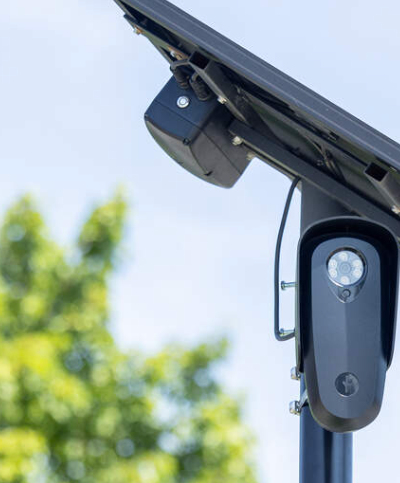
The ACLU of Kansas said it wants to have more conversations with the department about ALPRs, including reducing the data retention periods even further and limiting data sharing.
Oct 14, 2026
Overland Park police announce new department guidelines for automated license plate readers
“The Overland Park Police Department has engaged in an open, transparent dialogue about its policy on the use of ALPRs. Chief Jokerst and the department have sought the views of a wide range of individuals and organizations, including those like ours, who have divergent perspectives. The OPPD’s willingness to meaningfully engage and take steps to address our concerns is commendable. The ACLU of Kansas will continue to advocate for ending the use of ALPRs entirely, but the updated OPPD policy is a significant step forward in limiting ALPR use, scope and data retention in ways that seek to protect individual rights. We are committed to continuing the respectful, constructive dialogue which Chief Jokerst and OPPD initiated about ALPRs, including by calling for reduced data retention periods and limits on data sharing,” the ACLU said.
Oct 13, 2026
Overland Park tightens restrictions on license plate reader data. ACLU calls it a ‘significant step forward’
“The OPPD’s willingness to meaningfully engage and take steps to address our concerns is commendable,” Micah Kubic, executive director of the ACLU of Kansas, said in a statement.
Kubic said Overland Park police Chief Doreen Jokerst, who took over the department two years ago, sought his input. The civil rights nonprofit opposes widespread use of automated license plate readers, or ALPRs, and has launched a campaign against Flock Safety, one of the primary companies in the industry.
“The ACLU of Kansas will continue to advocate for ending the use of ALPRs entirely, but the updated OPPD policy is a significant step forward in limiting ALPR use,” Kubic said.
Oct 07, 2026
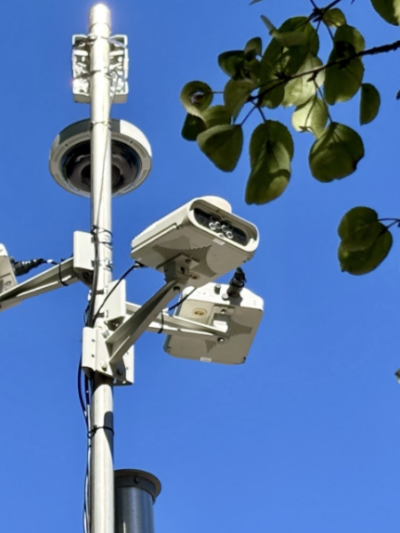
A reader’s question sparked our latest event about Flock cameras
The Beacon’s local government reporter Josh Merchant moderated the discussion. They were joined by Micah Kubic of the ACLU of Kansas, Wyandotte County Chief Public Defender David Magariel and KCUR metro reporter Sam Zeff. Each participant brought a different expertise to the conversation from privacy and civil liberties to how license plate reader information may enter criminal cases and how the technology is being used across state lines.

Aug 17, 2026
Olathe voting on adopting Kansas’ controversial 25-foot Halo Act into city code
Federal ICE agents have already invoked the state law multiple times in Olathe this summer — adding it to city code would let violations be prosecuted in municipal court too.

Apr 24, 2026
He Wrote an Op-Ed. Then Police Tracked Him
The ACLU is raising concerns about the abuse of automated license plate reader (ALPR) technology in the wake of a disconcerting story out of Kansas. The technology, which has been described as a tool for mass surveillance, was used by police to track a man who had published an opinion piece critical of the police department in a local paper, and who was subsequently suspected of putting up anti-ICE posters around town a few days before the op-ed was published.

Apr 06, 2026
Governor weighs implications of Kansas bill delving into liberty interests of speech, religion
Logan DeMond, director of policy at the American Civil Liberties Union of Kansas, said the bill would have a chilling effect on the exercise of constitutional freedoms.
“Protecting the right to worship is critically important, but it must be balanced with protecting the fundamental right to free expression,” DeMond said. “The bill’s civil enforcement provisions only heighten these concerns.”

Stay Informed
Sign up to be the first to hear about how to take action.
By completing this form, I agree to receive occasional emails per the terms of the ACLU’s privacy statement.
By completing this form, I agree to receive occasional emails per the terms of the ACLU’s privacy statement.