

From changes to early voting locations and offering translated election-related materials, changes to election administration in Johnson County have proven that accessibility isn’t just about whether resources exist—but whether voters can actually find and use those resources. Questions of accessibility depend on answers of voters being able to vote how, when, and where they choose, and having the ability to do so without unnecessary barriers.
Looking back on this year’s primary election, and with the general election just around the corner, we can learn from Kansas’ largest county, starting with early voting.
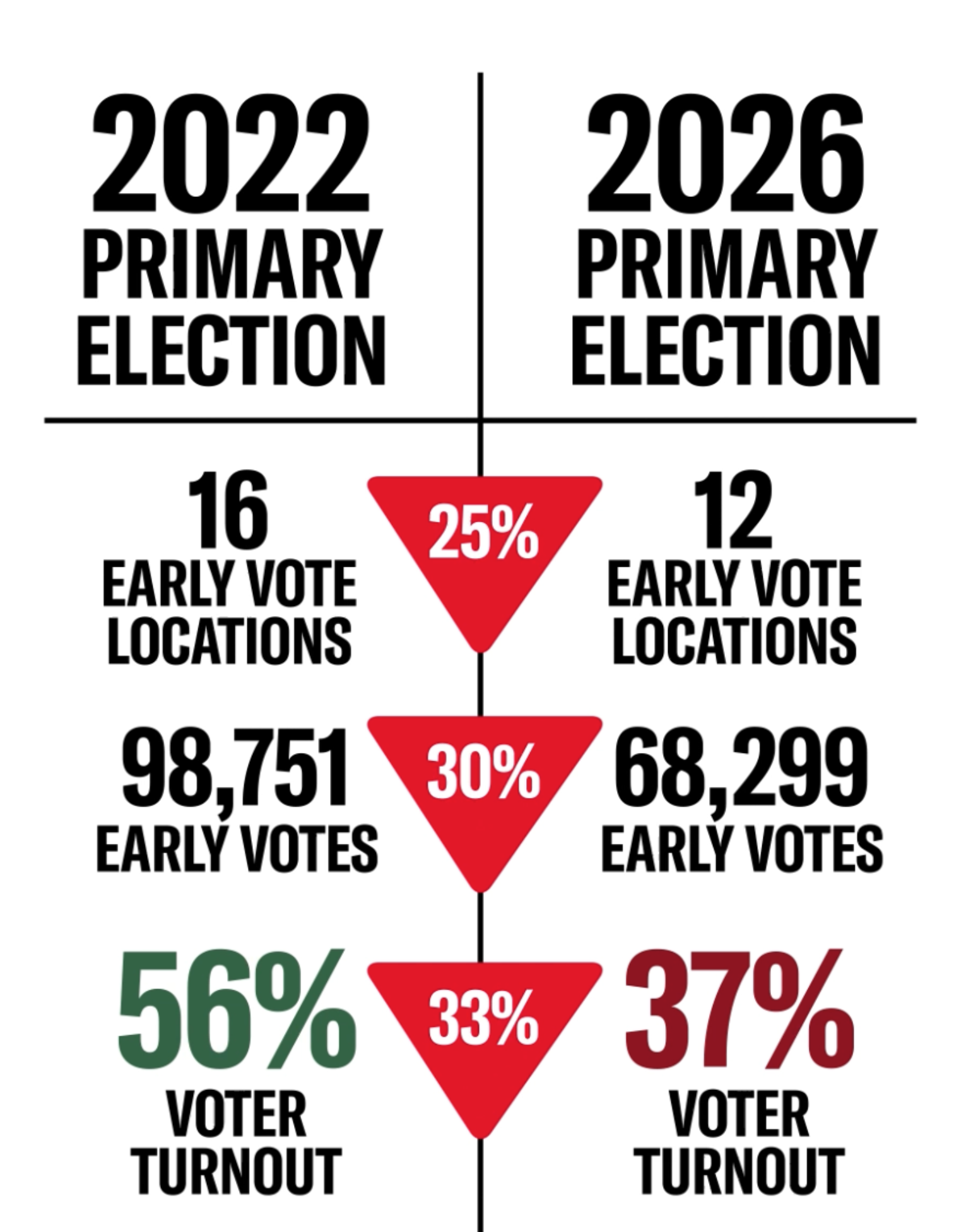
In the 2022 General Election, there were 16 early voting locations available in Johnson County, and nearly 114,000 early votes were cast. By the 2024 General Election, the county had expanded to 18 early voting locations, and more than 209,000 voters cast their ballot early. This progress slammed to a halt just two months before this year’s primary election, when the Johnson County Election Office made a last-minute decision to trade eight locations in some of the county’s most densely populated areas for two new ones in sparsely populated areas, dropping the total down to just 12.
While efforts to increase geographic diversity and increase the number of hours across all locations should be celebrated, the decision to close eight locations was made with no public input, with very little warning, and without good reason. The Johnson County Election Office requested additional funds for an “expansion in early voting locations” in their 2026 budget proposal, then removed eight locations from predominantly low-income areas and areas densely populated by people of color without any reasonable alternatives.
While the two new early voting locations are welcome additions, many of the removed locations are historically popular, high-volume voting sites. The early votes cast at these eight locations accounted for 19% of all Johnson County early votes in the 2025 General Election, but ballots cast at the two new locations contributed just 1% of total early votes in the 2026 primary. This year’s primary election also saw a decrease of nearly 30,000 early in-person votes, with the 2022 Primary Election bringing in 98,751, and only 68,299 in 2026. This trend can be found in the overall voter turnout, as well. The 2022 primary pulled off a 56.30% turnout, whereas 2026 saw an unofficial turnout of about 37%, a decline of almost 20%.
The contrast between the early voting numbers in these elections paints a clear picture about what it means to actually accommodate the needs of voters. Johnson County voters rely on early voting, and when faced with fewer options and increased travel times, turnout will reflect these inconveniences.
But expanding early voting opportunities is just one part of the story.
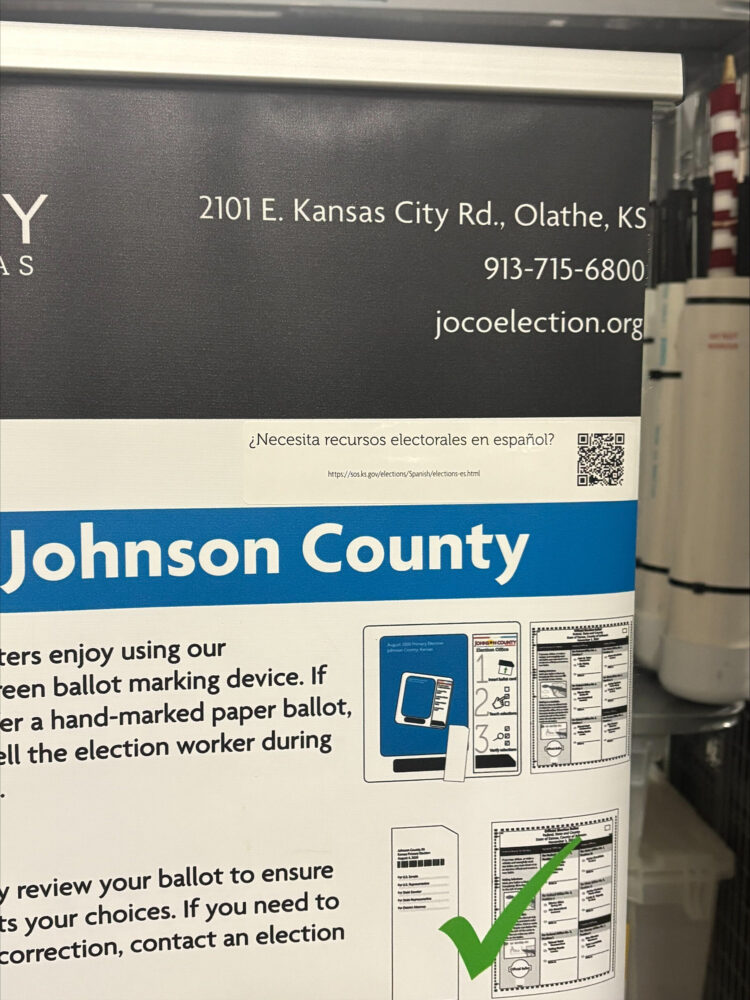
Another vital step in eliminating barriers to the ballot is closing the language gap by offering translated election-related materials to those who speak a language other than English, which includes approximately 76,000 Johnson County residents. In Johnson County and across Kansas, the overwhelming need for translated materials exists among Spanish speakers who are given an impossible choice: voting in a language they don’t confidently understand or being effectively excluded from participation. But it doesn’t have to be this way, and Johnson County has made small steps of progress in ensuring that these voters are not discouraged from casting their ballot. This year, the Johnson County Election Office posted QR codes at all polling places and on informational mailers about the upcoming election, which directed voters to the Kansas Secretary of State’s website where they can find ballots and sample ballots, registration forms, and informational materials in Spanish.
While this is a step in the right direction, it’s critical that the Johnson County Election Office continues to make improvements.
While the Johnson County Election Office can’t alter the resources provided on the Kansas Secretary of State’s website, they can make several additions to their own that would make voting more accessible and efficient, from voter registration to preparing to pull the lever on or before Election Day. For example, the Election Office could include the link to existing translated materials—or the “Elecciones” tab—on its website’s toolbar for better visibility. In addition to this simple change, any information that can be found in English should be made available in Spanish, including upcoming election information and important deadlines, candidate lists and information, and information about advance voting and election day polling places.
As for the QR codes themselves, their placement and prominence at the polls and on informational mailers determines how likely voters are to notice and use them. Each polling place in Johnson County contained signage with the QR code—which represents real progress in the fight for language access—but because these were squeezed into the corner of these signs, they were simply too small to notice. Voters who could have benefitted from their inclusion were unlikely to make use of them or see them in the first place.
As we gear up for the general election, the Johnson County Election Office has an opportunity to build on this progress in the fight for accessibility, both in terms of language access and early voting opportunities. These two accessibility practices maintain a close connection, and it’s the responsibility of election officials to ensure no voter is excluded due to a lack of resources or accommodation. By restoring all early voting locations for the general election and continuing to prioritize language access, Johnson County has the power to improve not only their own elections, but spark similar change in counties across Kansas.
Related Issues
Related Publications
All Democracy is Local 2026
Stay Informed
Sign up to be the first to hear about how to take action.
By completing this form, I agree to receive occasional emails per the terms of the ACLU’s privacy statement.
By completing this form, I agree to receive occasional emails per the terms of the ACLU’s privacy statement.